

In a proactive move to address the gender disparity within STEM fields, Orion Environmental Inc. (Orion) proudly matched staff donations resulting a $2,000 contribution to the Association for Women in Science (AWIS) this September. The staff contributed generously to AWIS, an organization dedicated to advancing women in Science, Technology, Engineering, and Mathematics (STEM) fields. This financial support reflects the company's commitment to fostering gender equality and empowering women in scientific careers.
The background to this initiative reveals a persistent gender gap in STEM professions. Although the percentage of women majoring in STEM programs increased from 34% in 2010 to 46% in 2022, women still make up only 28% of the STEM workforce. Orion acknowledges this imbalance and strives to create opportunities for women in the male-dominated STEM landscape.
Orion is proud of
Orion Hires New Staff Scientist
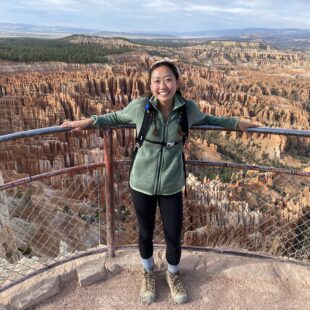
New Staff Alert! In April 2021, the Long Beach office welcomed Staff Scientist Courtney to the team. Courtney has a B.S. degree in Environmental Science and Policy, with a minor in Computer Science, from Chapman University. She has experience working with natural resources in both the public agency and non-profit sectors, which ranged from monitoring water quality and habitat conditions in the LA River to conducting bioassessments of constructed, urban-runoff treatment wetlands. Courtney has been involved in several community engagement efforts to educate and share with the community.
In her free time, Courtney loves going to the beach, reading by a campfire, and hiking. When she is not outdoors, you can find her watching reruns of Law and Order: SVU and keeping up with irrelevant celebrity news.
Welcome to the team, Courtney!
Cue in the confetti! O’hara is turning 5 in Orion years!

O’hara started at Orion back in 2016 and has become a critical part of our team. She is a skilled geologist and project manager and, with her kind and upbeat humor, she lights up any room she enters. She is constantly testing herself in her profession and learning new skills to bring in a fresh perspective to projects. Orion not only appreciates her innovative approach to project management and social media; we also appreciate her baked bread and her lunchroom commentary when The Bachelor is on!
We asked O'hara what makes working for Orion so unique. This is what she had to say:
Orion is unique in that they can push you to progress outside of your comfort zone, within reason. They will give you the chance to take on new things and allow you to learn through some trial and error without sacrificing quality. This was my first job out of college, so I was nervous and critical about getting things right. Orion made me feel more comfortable when
Breaking News!!! Orion Receives 2020 Project Merit Award from the Climate Change Business Journal
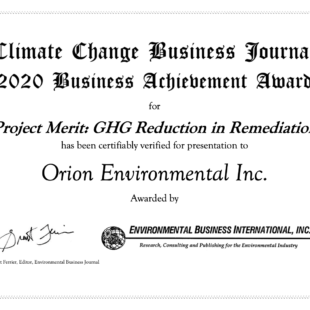
On 12 March 2021, Orion received the 2020 Project Merit Award from the Climate Change Business Journal (CCBJ) for Greenhouse Gas Reduction in Remediation. This project involved the accelerated shut down of active remedial systems and a reduction in groundwater monitoring at a complex site. Sustainability evaluation results indicated a 99 percent reduction in sustainability metrics including greenhouse gas and air emissions, water and energy usage, and accident risks.
The site contains two active bulk fuel terminals and a former retail gasoline station with multiple water-bearing zones, heterogeneous lithology, and residential and surface water receptors. Remedial operations in 2016 included dual-phase extraction and oxygen injection systems, monthly manual LNAPL monitoring and recovery, and quarterly to annual groundwater monitoring at 90 monitoring wells. Orion transparently communicated with the regulatory agency with the goal of shutting down active systems and
Orion Hires New Staff Geologist
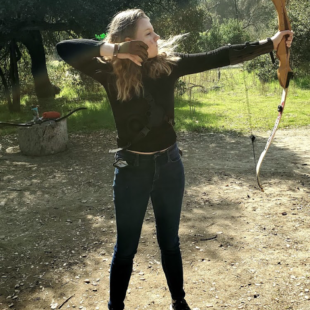
In March 2021, the Long Beach office welcomed Staff Geologist Cassie to the team. Cassie has a B.A. degree in geology from Occidental College and completed their geology field camp in Italy through George Mason University. They are currently completing their independent study at Cal State Fullerton in order to sit for the Fundamentals of Geology exam. Cassie’s research topic of choice focuses on analyzing arsenic and nitrate concentrations in groundwater wells throughout Los Angeles.
During their spare time, Cassie enjoys archery, tending to their succulent garden, and doing crafts. During the COVID-19 pandemic, they increasingly became surrounded by little plants and various paintings. If you ever look around and ask yourself, “Where’s Cassie?”, the answer is always camping.
Welcome to the team, Cassie!
Kirstin completes her first year at Orion!
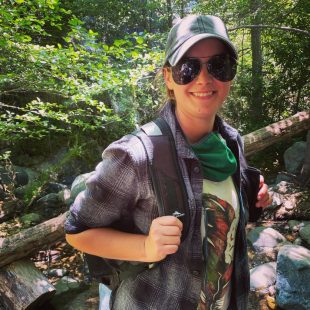
Join us in celebrating Staff Geologist Kirstin’s first year with Orion! We all know the first year in consulting can be a doozy, and 2020 threw in a pandemic to shake things up even more, but Kirstin didn’t skip a beat. She showed up on day one at the Burbank office eager to learn the skills of the trade. Kirstin has gained experience this past year working on projects in many different stages, from install to decommissioning.
A coworker remembers Kirstin arriving to assist them in the field during a rare southern California rainstorm. While the field day could’ve easily been filled with complaints, Kirstin was ready for action with a positive attitude that kept team morale high all day! What made Kirstin interested in working for Orion? Orion feels like a family working together, I have never once felt like I am in a competitive work environment and that was something important to me. Going home from the office (or logging off the computer these days) I feel a sense of
Sean Reaches 7 Years at Orion!
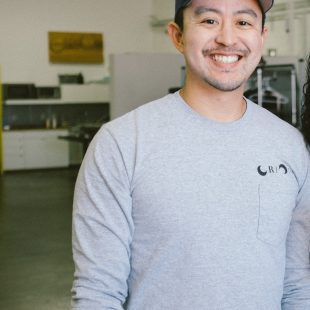
Join us in celebrating Sean’s 7-year milestone at Orion! We appreciate his welcoming attitude and imaginative solutions. Sean adds value to any project team with a mellow confidence and ability to roll with whatever is thrown his way. A day in the field with Sean is a day well spent, he’ll be a team leader and comedian while showing staff the ropes. He willingly participates in lunchtime Just Dance sessions and jumps on any opportunity to acquire new fermenting skills. What makes working for Orion unique for Sean? What makes Orion different is the people. Only at Orion would the owner of the company play a self-edited 41-minute cat video compilation for his staff. I mean, who does that?
Congratulations on reaching the big s-e-v-e-n with Orion. We thank you for your hard work and dedication over the years!
Groundwater System Evaluation Leads to Shutdown of Ineffective Remedy
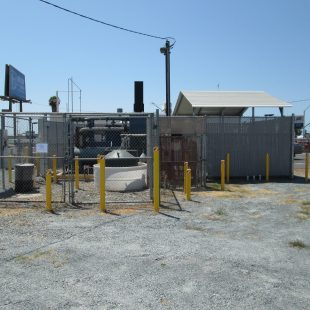
In August 2013, Orion began managing an active retail gasoline station in southern California impacted by petroleum hydrocarbons released to the subsurface by former fueling infrastructure. Previous investigations indicated that benzene was the primary contaminant of concern and risk driver for the site. Light non-aqueous phase liquid (LNAPL) was observed intermittently in onsite monitoring wells. Dissolved benzene concentrations at offsite wells were near the effective solubility of this compound in gasoline, which typically indicates the nearby presence of LNAPL above residual saturation.
The existing remedy included air sparging and soil vapor extraction (SVE) connected to a network of 41 remediation wells. The system was originally designed to treat soil and groundwater upgradient of the former source area, but was subsequently expanded in early 2013 by others to treat source area impacts.
Upon taking over site management, Orion evaluated post-expansion
Keeping our Business and Employees Safe and Productive During the Pandemic
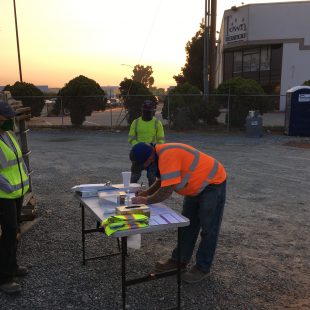
These are unprecedented, challenging, trying times. Are you getting a little tired of hearing that for the past 6 months? I know I am. However, COVID-19 is still active, and it is imperative that businesses operate in a manner that maximizes the safety of employees, clients, and the public.
Orion is an essential business and has been operating throughout the pandemic. However, it is anything but business as usual. The state of California issued its order to stay home on 19 March 2020. That same day, staff at Orion were notified to begin working from home. Our staff in Northern California had already been working from home for over a week.
A number of our staff were not initially equipped to work remotely as our collaborative culture is more suited to an office environment. Laptop computers were provided to those who only had office desktop computers. We made sure that all staff had access to corporate servers through our Virtual Private Network (VPN). All
Orion Day – The New Normal and a Murder Mystery!
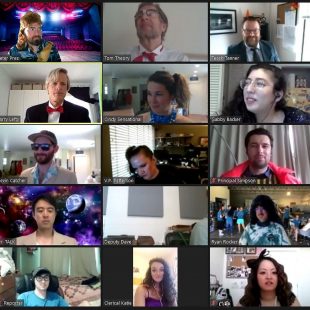
COVID-19 may have put a damper on any physical and social interactions this year, but it couldn’t stop us from making Orion Day happen! Every year, staff look forward to getting together at Long Beach HQ for some B&B (business and bonding). Since staff were unable to congregate in Long Beach this year, Orion brought Orion Day to them thanks to modern technology and video conferencing! The day started off with our annual State of Orion meeting, where we reviewed company financials for the year-to-date, discussed marketing and business development strategies (including our awesome new newsletter, and completed a little professional development training. With the ongoing injustices happening across our nation, a segment of the State of Orion focused on the importance of diversity and inclusion (D&I) and what Orion is doing to fight racism and other inequalities. Orion
- 1
- 2
- 3
- …
- 6
- More Articles »